Hybrid Engine
Diesel and electric propulsion in parallel. The system selects between them automatically: high-load segments call the diesel, low-load cruising and manoeuvring run on electric.
A purpose-built supply vessel for Maldives resorts that take their environmental commitments seriously. Less diesel, verifiable emissions, and an asset you own.
The Maldivian dhoni is the workhorse of the country's economy. It supplies resorts, links atolls, carries the freight that keeps the islands running. It is also a vessel from another era, built around assumptions about fuel, weight, and the sea that no longer hold.
Every working day, hundreds of them burn marine diesel doing work that today could be done with a fraction of it. The fuel bill is paid by the operators that charter them. Increasingly, by the resorts and communities that depend on them. The emissions are paid by everyone else.
The technology has barely changed in fifty years. The economics around it are changing fast.
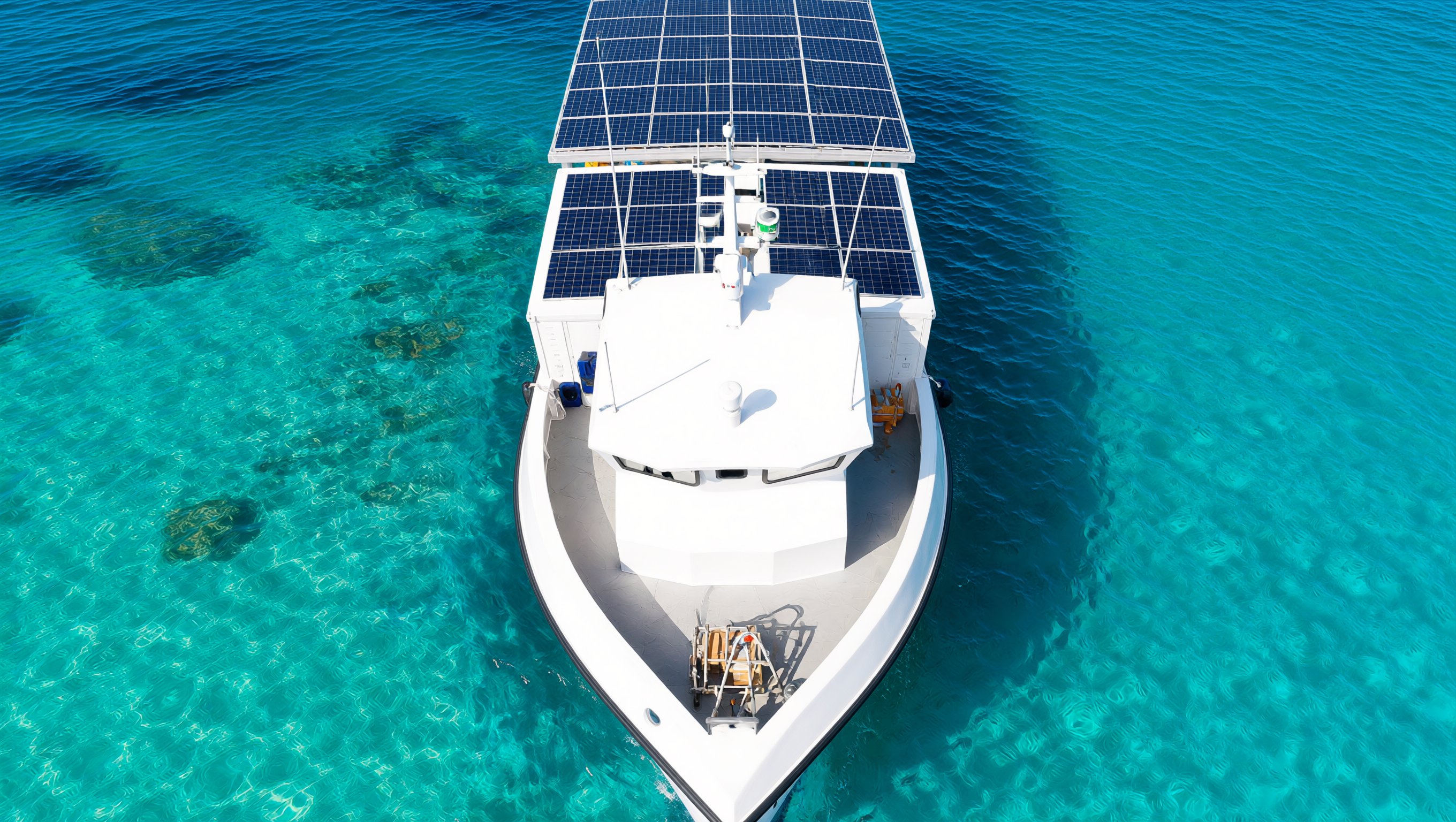
A comparable wooden dhoni runs on one source of power, all the time, regardless of what the voyage demands. The engine is sized for the heaviest moment of the route and runs oversized through every other moment.
TheHybridDhoni is built around three energy nodes, combined through a single control logic that chooses between them by segment.
Diesel and electric propulsion in parallel. The system selects between them automatically: high-load segments call the diesel, low-load cruising and manoeuvring run on electric.
The roof generates while the boat works. In the Maldivian climate this is not a marginal contribution: solar carries most of the onboard auxiliary load and feeds charge back into the propulsion batteries.
A dockside connection closes the loop. Every voyage begins with energy that did not have to come out of the diesel tank.
Acquiring TheHybridDhoni is not a sustainability statement. It is an operating decision with concrete outcomes that hold up to scrutiny — by your sustainability team, by your auditor, by your guests, and by your own finance function. And it comes from the operator that has run inter-atoll resort supply in the Maldives, week after week, since 2019.
A smaller diesel bill on every voyage, against a comparable wooden dhoni on the same route at the same load. The saving is mechanical, not aspirational: a hull that needs less power, an engine sized for the leg rather than the peak, solar and shore power displacing diesel hours.
Onboard metering and telemetry, logged continuously, structured for ISO 14064-aligned third-party verification. Not estimates — measurements.
Scope 3 maritime data your sustainability team can actually use. Exportable, traceable, auditable against the frameworks your parent group reports under.
A working, visible piece of infrastructure that demonstrates the commitment — without overstating it. No greenwash claim, just the data behind it.
This is an asset acquisition, not a charter contract. The boat is on your balance sheet, on your route, on your schedule — and the data it produces is yours. We deliver it, commission it, and stand behind it.
TheHybridDhoni is built for resort operators whose environmental commitments are not a marketing line. The vessel becomes part of the property's operating infrastructure, and the data it produces becomes part of the property's reporting. It works for any resort that depends on inter-atoll supply and has to answer for the emissions that supply generates.
Resorts under group-level disclosure obligations.
Parent company reports under CSRD, SEC climate rules, or comparable frameworks. Scope 3 maritime emissions are inside the disclosure perimeter, and verifiable data is the binding constraint.
Independent resorts with a sustainability brand.
The environmental commitment is part of the property's identity and the guest experience. Voluntary certifications, EarthCheck, Green Globe, GSTC — the standard the property holds itself to is higher than the regulation requires.
Operators serving these resorts.
Logistics operators that supply resorts in the categories above, and that need a vessel which lets their clients report the supply chain honestly. The buyer is the operator; the data flows to the resort.
Every property is different. The route, the load, the operator structure, the reporting frameworks the parent group sits under — these shape what acquiring TheHybridDhoni would actually look like for you. The path from first conversation to working vessel has three steps.
The working session.
A focused conversation on your route: the legs, the loads, the current vessel or operator, and the frameworks your group reports under. Built around your obligations, not a generic deck.
The route assessment.
We come back with the technical brief and the indicative numbers for your case — fuel, emissions, payback against your current vessel — held to the discretion the conversation deserves.
The commission.
The vessel is built to order. The first owner shapes the configuration against the route, and takes delivery commissioned, crew familiarised, with metering and reporting running from day one.
If supply-chain decarbonisation is on your operating agenda, or on the agenda of the group your property reports into, the first step costs an hour.
Every choice is the conservative engineering answer to an operational reality on the ground. The rest is a conversation.